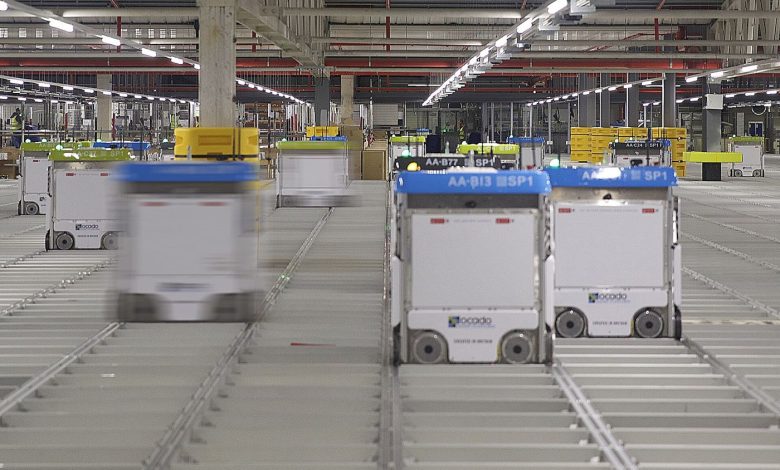
In a busy fulfilment warehouse, the most impressive technology is often the quietest. Fleets of low, flat robots glide beneath tall shelving units, lifting them gently and carrying them to packing stations where people pick the items customers have ordered. Instead of staff walking miles each day between aisles, the shelves now come to them. Sensors help each robot plan a route, slow down near colleagues, and wait its turn at busy crossings. Managers say the change is less about replacing people and more about removing the heaviest, most repetitive journeys from the working day, leaving staff to handle checking, packing and problem solving. The change also reshapes the working day for staff. Pickers stay at well-lit stations with goods arriving in a steady sequence, which reduces heavy lifting and long walks on hard floors. Supervisors monitor a map of the whole fleet on a single screen, spotting congestion early and sending help to any station that is falling behind during the busiest shopping periods of the year.
What the Evidence Shows
Sharing a floor safely takes careful design. Robots use cameras and distance sensors to build a live picture of their surroundings, and they stop automatically if a person steps unexpectedly into their path. Warehouses mark out clear walking routes, charging bays and no-go zones so that humans and machines each understand the shared space. Software coordinates the fleet like traffic control, preventing queues and spreading work evenly across the building. When a robot’s battery runs low, it simply leaves the rotation and heads for a charger. The result is a calmer, more predictable warehouse where goods keep moving steadily through the day. Maintenance teams play a quiet but essential role, cleaning sensors, checking wheels and swapping worn parts before small faults stop a robot mid-aisle. New staff receive training that treats the robots as predictable colleagues with fixed habits rather than obstacles to dodge. As confidence grows, many warehouses report that people and machines settle into a shared rhythm that feels surprisingly natural. Reporting and analysis from sources such as MIT Technology Review track the same developments, and specialists following warehouse robots say the direction is now consistent across independent lines of evidence.
The Wider Context
The wider context is an industry learning to ship capability and restraint together. Products built around warehouse robots now launch with safety evaluations, usage data and rollback plans as standard, because enterprise buyers and regulators ask for them in the first meeting. Companies that treated those questions as friction are discovering they have become the purchase criteria.
What Happens Next
What happens next for warehouse robots depends less on another breakthrough than on the unglamorous work of reliability, pricing and support. The buyers evaluating it now are not enthusiasts; they are operators with budgets and auditors, and their checklists will decide the timeline. On the evidence of the current pilots, the technology has earned the right to be judged by them. You can follow related developments in our coverage of technology.
There is a practical lesson in all of this for readers deciding what to do today. Start with the verified facts, be wary of anyone promising certainty, and prefer reversible steps while the evidence is still developing. Circumstances differ by country, income and personal situation, so general guidance should always be weighed against your own context before you act on it in any significant or lasting way.