Transaction fees play a crucial role in cryptocurrency trading and investing. Many users overlook the range of costs involved, focusing only on asset price and missing hidden charges that reduce net returns. Understanding exchange fees enables you to avoid unnecessary expenses and manage your portfolio more effectively.
Whether you trade crypto actively or invest with a long-term perspective, transaction fees have a direct impact on your strategies and outcomes. BitDelta serves as a clear example that the cost of buying or selling assets is only one part of the total expenses involved. Many participants underestimate the influence fees have on execution and overall returns.
The primary exchange fees affecting your trades
Trading fees are among the most visible costs you encounter on any platform. These fees are usually charged as a percentage of the value of each transaction, although some exchanges use a flat fee for smaller trades. The fee is deducted directly from your account when an order is executed, making it easy to overlook if you do not follow statements closely.
Deposit fees arise when you transfer assets or money into an exchange. These are less common with cryptocurrencies than with traditional bank transfers, but some platforms do apply charges, particularly when third-party payment processors are involved. It is important to confirm whether an exchange charges deposit fees before transferring substantial funds.
Withdrawal fees are charged every time you move assets from the exchange to your own wallet. These fees often vary depending on which cryptocurrency you are withdrawing and the network you select. Networks with higher congestion or higher base fee rates can make these costs unpredictable and sometimes substantial.
Understanding maker, taker, and incentive rates
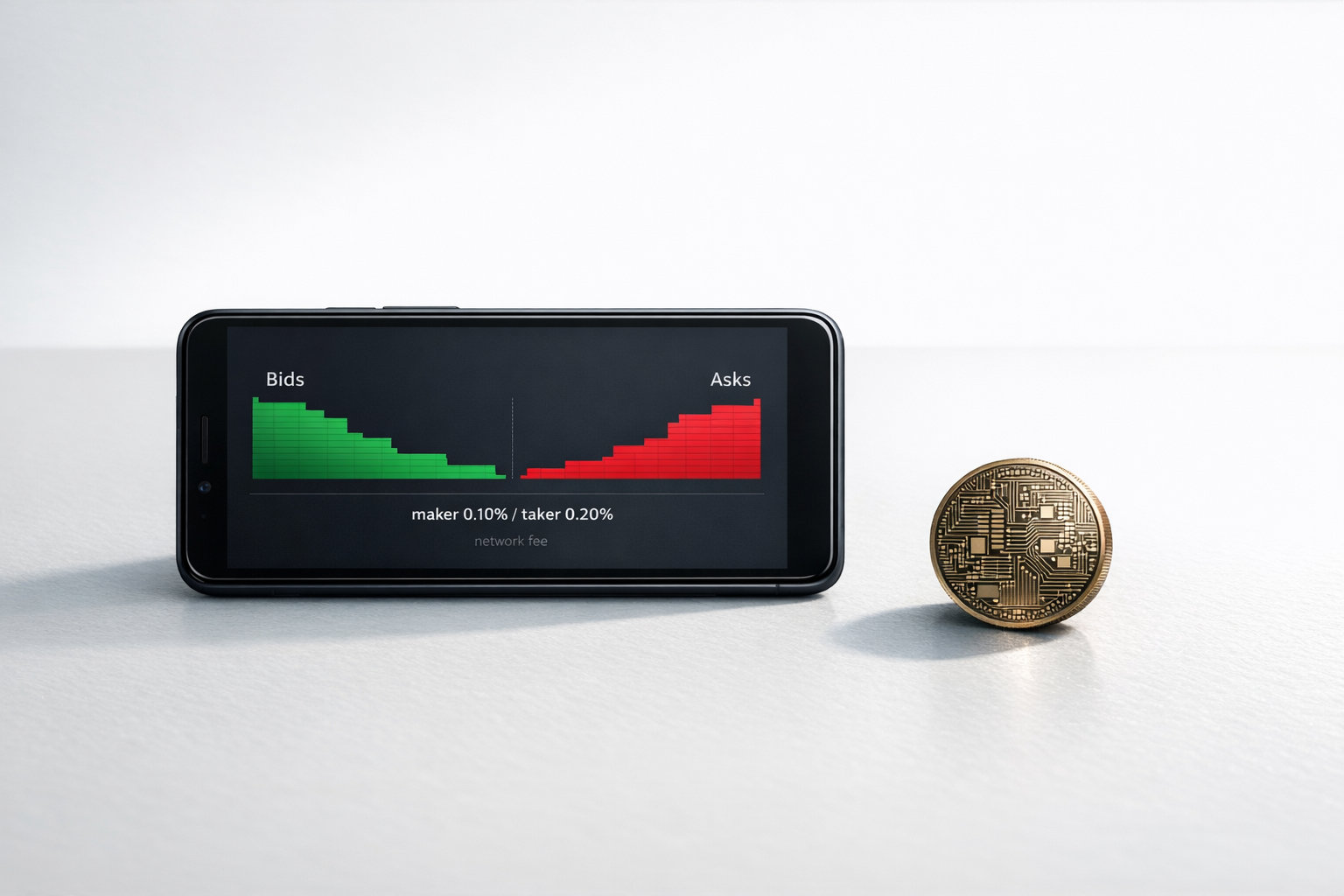
When you place an order on a crypto exchange, you participate as either a maker or a taker. Makers provide liquidity by adding orders to the order book, while takers remove liquidity by matching existing orders. The difference between these roles determines which fee structure you pay, as exchanges often incentivize one role over the other.
Limit orders usually act as maker orders, while market orders are commonly taker orders. A limit order sets a specific price, so it might not fill immediately, thus creating liquidity for others. Market orders, in contrast, execute instantly at the best available price, taking liquidity already provided by existing listings.
Platforms often reward makers with lower fees to encourage more liquidity in the marketplace. Takers usually pay a higher fee for the immediate execution they require. Knowing whether your trades mainly make or take liquidity helps you estimate costs more accurately over time.
Hidden charges: spreads, slippage, and markups
While direct fees are clear, several hidden costs can decrease your profits. The bid-ask spread is the difference between the highest buy price and lowest sell price for an asset. It acts as an implicit fee and can widen during periods of low liquidity or rapid price movement, raising trading costs.
Slippage happens when your order executes at a price other than you expected, often in fast-changing or thin markets. For larger trades or illiquid pairs, price movement between order placement and execution can lead to significantly higher costs. Even with transparent fee schedules, these market effects influence actual transaction results.
Currency conversion can also lead to hidden costs, especially if you deposit or withdraw using a currency not natively supported by the platform. Payment processor markups may be added behind the scenes, causing your total expense to go beyond published commissions. Therefore, effective cost calculation should consider all elements that affect your final account balance.
Distinguishing network fees from exchange commissions
Blockchain network fees are required for processing and confirming cryptocurrency transactions. These fees compensate miners or validators on the relevant blockchain, and their amounts can change significantly based on network congestion and activity. Exchanges do not control these rates but may decide whether to absorb them or pass them on to users.
Depending on the asset and the network, some exchanges include network fees within their withdrawal charge, while others list these costs separately. This difference is important for accounting and planning, especially if you move funds often between wallets or services. It is common for the same asset’s withdrawal fee to differ between exchanges or change from one day to the next.
For example, high transaction volume on a blockchain can cause network fees to rise unexpectedly, making withdrawals more expensive even if the exchange’s basic commission does not change. Knowing when network fees apply and who bears them allows for more predictable cost planning.
Factors causing fee differences across platforms
Several factors contribute to fee variations between cryptocurrency exchanges. Liquidity is a major factor, as platforms with deeper markets usually provide lower spreads and more competitive fees. Infrastructure quality, compliance requirements, and security protocols also affect operational costs, which are ultimately reflected in user fees.
Many exchanges use fee tiers that reward higher trading volume or particular account levels with lower costs. This approach supports frequent traders but may not benefit occasional users. Volume-based tiers and loyalty programs can change effective pricing considerably, depending on your trading habits.
Spot, margin, and derivatives trading come with different fee schedules that may include additional charges for leverage or overnight financing. Understanding the specific trading product you use and its cost structure ensures better comparison and decision-making.
Strategies to assess and compare effective costs
Preparing a checklist for total cost per trade helps you avoid surprises and find hidden fees early. This list should account for trading fees, deposit and withdrawal charges, bid-ask spreads, and any possible network fees. Reviewing each part of the process provides a clearer estimate of your expected expenses.
When choosing an exchange, matching its fee structure to your trading style is as important as looking for the lowest charges. Active users may benefit from platforms with volume incentives, while occasional traders can focus on simple, transparent pricing. Reputation for reliability and execution quality also matter, as these factors can affect transaction costs through outages or poor trade fills.
Transparency is essential in any exchange, as clear documentation and responsive support lower the risk of unexpected deductions. The assets you trade, transaction methods, and order types all play a role in your total fee burden. Understanding how an exchange communicates these aspects is important for effective account management.
Typical mistakes and how to avoid them
One common error is focusing only on low trading fees and missing higher withdrawal costs or wide bid-ask spreads. Not considering the full cost chain can erode profits, especially for small or frequent trades. Reviewing all associated fees before transferring assets can help you avoid unexpected expenses.
Another mistake is moving funds between wallets and exchanges too often. Each withdrawal typically incurs a separate network fee, which can add up over time. Limiting transfers to essential occasions helps minimize these repeated costs.
Using market orders in illiquid environments can cause extra costs through wider spreads and higher slippage. A limit order can sometimes provide more control over execution price, though it may not fill instantly. Choosing order types thoughtfully can reduce expenses without altering your overall trading goals.